The nurse said it so casually that the whole waiting room went silent.
“Once a day? At your age, that’s a bit much for the skin, you know.”
Marie, 68, clutched her handbag and laughed it off, but you could see the doubt in her eyes.
She grew up in the era where a “good daily scrub” was a sign of proper upbringing. Now a health professional was suggesting she might be overdoing it.
Around her, a few heads turned. A man in his seventies checked his hands, as if he’d suddenly forgotten whether he was clean or not.
The conversation that followed sounded like a small revolution.
Someone finally asked: “So… how often are we supposed to shower after 60, really?”
The answer was not what anyone expected.
After 60, your skin doesn’t age. It reorganizes
Watch an older person step out of a long hot shower.
They’re clean, yes, but look closely: the skin on their arms is a little tighter, their calves slightly itchy, their face pinker than it should be.
This isn’t just “getting older”.
Past 60, the skin changes its priorities. It produces less sebum, loses water faster, and the protective barrier that once tolerated teenage showers twice a day starts protesting, quietly at first.
The more you scrub and foam, the more that barrier cracks.
What feels fresh in the moment sometimes leaves a hidden bill.
Dry patches, micro-tears, redness that slowly turns into chronic irritation.
The body is talking. Just not always in words.
Think about your parents’ or grandparents’ generation.
Many of them didn’t even have a shower at home before their thirties or forties. Weekly baths, a basin, a washcloth, and yet they weren’t walking hygiene disasters.
A large dermatology survey in Europe found that people over 60 who showered every day had significantly more reports of dry, itchy skin than those who washed two to three times a week, combined with daily “targeted” washing of key areas.
Same age, same cities, different rhythm.
Take Gérard, 72, who used to shower morning and night, “just to feel right in my clothes”.
Chronic eczema, broken sleep from itching, creams that did nothing.
His dermatologist suggested a shocking plan: one full shower every two to three days, lukewarm, plus quick daily wash at the sink.
Three weeks later, he wasn’t cured of everything, but he finally slept through the night.
There’s a simple logic behind all this.
Soap and hot water don’t just remove sweat and dirt, they also strip away the thin film of oils and the microbiome that protect your skin. After 60, that film rebuilds more slowly.
So if you shower every day like you did at 30, your skin simply doesn’t have time to reset.
It becomes more vulnerable to infections, small wounds, and that burning sensation you blame on “sensitive skin” when it’s actually “over-washed skin”.
The plain truth is: you can be perfectly clean without a daily full-body shower.
The body doesn’t need a reset button every 24 hours from head to toe.
What it needs is a smarter routine that respects its new pace.
The right rhythm: targeted daily, full shower on a schedule
So what is that magic number everyone in the waiting room wanted?
Dermatologists who work a lot with seniors often converge on a similar answer:
For most people over 60, a full shower two to three times a week is enough.
Between those days, daily hygiene should focus on what specialists call the “key zones”: armpits, groin, feet, face, and hands.
Warm water, a mild cleanser, a clean washcloth.
Think of it as two levels of hygiene:
Level one, every day at the sink, five to ten minutes.
Level two, full shower on fixed days, with gentler products and less heat.
This rhythm respects the skin, the joints, and frankly, your energy.
This is where habits collide with reality.
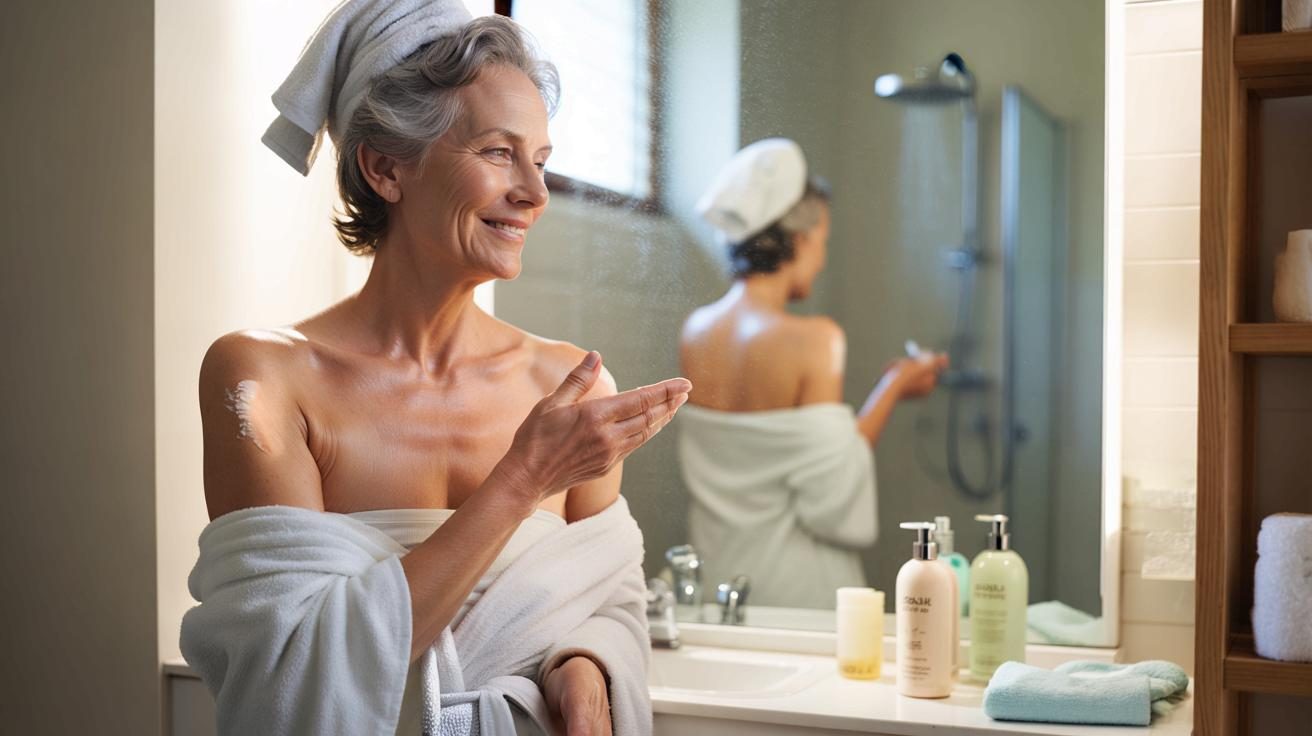
We’re used to equating “feeling fresh” with stepping out of the shower dripping wet, towel on the head, steam on the mirror.
Yet a lot of the issues people after 60 complain about – legs like crocodile skin, arms full of tiny red dots, scalp that stings – are classic signs of over-washing.
Not lack of hygiene. Too much hygiene.
A common mistake is using the same gel for the body, face, and even intimate areas.
Another is staying under hot water “to relax” for 20 minutes, then rubbing vigorously with a rough towel.
It feels good for the muscles, but the skin pays the price.
We’ve all been there, that moment when you scratch your shins absentmindedly and suddenly realize they’re white with flakes.
That’s not “normal aging”. That’s skin begging for a truce.
“After 60, I tell my patients to think like gardeners, not like cleaners,” says Dr. Léa Martin, dermatologist in Lyon.
“You’re tending to living soil. If you hose it down and scrub it every day, nothing healthy grows.”
- Choose the right frequency
For most seniors: full shower 2–3 times a week, daily wash of key zones at the sink. Adjust if you sweat a lot, exercise, or live in extreme heat.
- Use gentler products
Look for unscented or lightly scented cleansers labeled for “dry” or “sensitive” skin. Avoid aggressive deodorant soaps on the whole body.
- Lower the water temperature
Lukewarm, not hot. Your skin should not be red when you get out. Hot water strips oils faster and deepens dryness.
- Shorten your showers
Aim for 5–10 minutes, not 20. Last minutes can be reserved for a quick cool rinse on the legs to stimulate circulation.
- Hydrate right after
Lightly dab the skin with a towel, then apply a simple moisturizing cream or oil while the skin is still slightly damp. This locks in water instead of letting it evaporate.
Clean, comfortable, and confident: redefining “feeling fresh” after 60
The hardest part isn’t changing the number of showers.
It’s changing the story we tell ourselves about what being “clean” means once you pass 60.
Some will hold on to daily showers because they feel like a shield against aging, a sign they’re still “on top of things”.
Others quietly stretch the days between showers because of fatigue, fear of falling, or the simple hassle of bending and balancing in a slippery tub.
Both groups often feel a bit guilty, for opposite reasons.
The body, meanwhile, just wants a rhythm that doesn’t exhaust it.
A routine that cleans what needs to be cleaned, protects what still protects you, and doesn’t turn hygiene into a daily marathon.
Key point Detail Value for the reader
Optimal shower frequency after 60 Two to three full showers per week, with daily targeted washing of key areas Reduces dryness, itching, and irritation while keeping you genuinely clean
Gentle method Lukewarm water, mild cleansers, short showers, and moisturizing right after Protects the skin barrier and lowers the risk of cracks and infections
Adapted mindset Rethink “freshness” beyond daily full-body showers and accept new bodily needs Less guilt, more comfort, and a routine that respects age, energy, and dignity
FAQ:
-
Question 1Is it unhygienic to shower only two or three times a week after 60?
-
Answer 1
For most people, no. As long as you wash armpits, groin, feet, face, and hands every day, you’re maintaining solid hygiene. Odor comes from bacteria in specific zones, not from your forearms or shins.
-
Question 2What if I sweat a lot or exercise regularly?
-
Answer 2
You can add an extra shower on intense activity days, using lukewarm water and gentle products. Focus on sweaty zones, avoid scrubbing your whole body harshly each time.
-
Question 3My skin is extremely dry. Should I shower even less?
-
Answer 3
Sometimes yes, especially in winter. Talk to a dermatologist, but many will suggest two full showers a week, very mild cleansers, and rich moisturizers right after washing.
-
Question 4Is a bath better than a shower after 60?
-
Answer 4
A short lukewarm bath can relax joints and muscles, but long hot baths dry the skin even more. If balance is an issue, a seated shower with a grab bar is often safer.
-
Question 5Can I use the same soap for my body and face?
-
Answer 5
Ideally, no. The face is more fragile, especially after 60. Use a gentle cleanser for the face and a separate mild product for the body to avoid tightness and redness.