The first time my orchid dropped all its flowers, I thought I’d killed it. The windowsill looked suddenly bare, just a pot with a few stiff leaves and a sad green stick. I hovered with my watering can, searching gardening forums at midnight, half-tempted to throw the whole thing away and start again with a cactus. Everywhere, people were posting the same question: “Why won’t my orchid bloom again?”
Then I saw an odd little tip buried in a comment thread.
Place this object beside your orchid, the person wrote. Two weeks, maximum. I rolled my eyes, tried it anyway… and watched a tiny spike push out of the stem like a slow-motion miracle.
Something was clearly going on.
And it starts with what you put right next to the pot.
The surprisingly powerful object your orchid has been waiting for
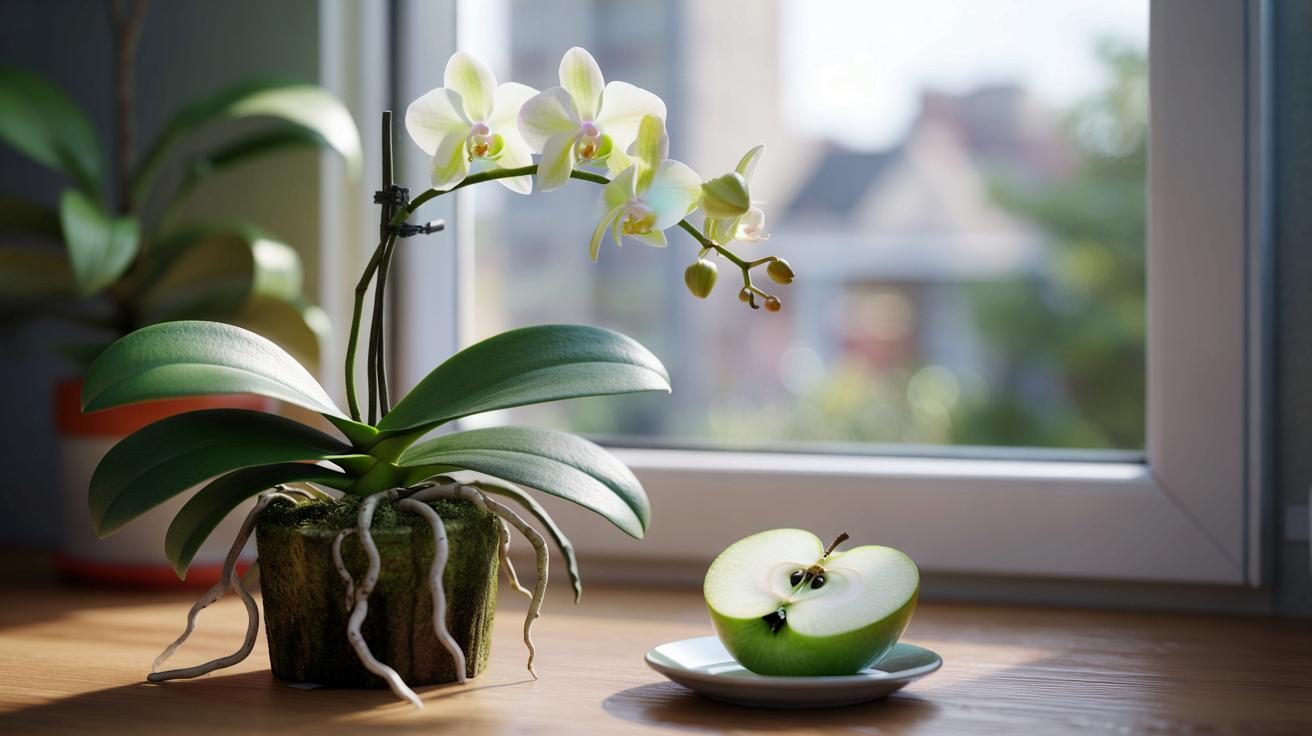
On a quiet kitchen counter in Lyon, a white phalaenopsis orchid started growing a new flower spike three days after an apple slice appeared beside its pot. Nothing magical, no fertilizer overkill, no fancy grow lamp. Just a small green apple, placed in a saucer, close enough that its perfume mingled with the damp bark after watering.
The owner, a 60-year-old retired teacher, swore she’d done nothing else differently. For months the plant had sulked. Then the apple arrived, and the dormant buds suddenly woke up.
The apple trick sounds like something your grandmother would whisper over tea, half-secret, half-joke. Yet growers have been playing with nearby fruit for years. They talk about rescuing “sleeping” orchids by setting a ripe banana or apple close to the plant, then quietly waiting. On forums, people post before-and-after photos: bare stems, then new green nubs, then fully opened blooms.
You won’t find it written on the glossy tag dangling from the pot in the supermarket. Those only say “bright, indirect light” and “water sparingly”. The real stories circulate between people who’ve stared at the same pot for months, hoping for a sign of life.
There’s a simple logic behind this quiet little hack. As fruit ripens, it releases ethylene, a natural plant hormone that sends powerful messages in the air. Orchids, like many plants, can “read” those signals. Ethylene nudges them to shift gears: to stop just growing leaves and start thinking about reproduction and flowering.
Placed nearby, a ripe apple turns into a tiny hormone diffuser, coaxing the orchid out of its long green pause. It doesn’t replace good care. It just gives the plant a gentle push it sometimes lacks on a shelf far from its natural tropical rhythms.
How to use fruit to wake up a stubborn orchid
The method itself is almost disarmingly simple. Take a ripe apple or banana and set it on a small plate near your orchid, somewhere between 5 and 20 centimeters from the pot. Not touching the bark, not hidden behind another plant, just quietly sharing the same little pocket of air. Then leave it there for three to five days.
Keep your watering habit as usual and resist the urge to fuss. The fruit does its whispering work while you answer emails and scroll your phone, gently flooding the air around the orchid with ethylene.
A lot of people go wrong by getting overexcited. They pile two bananas, three apples, maybe a pear “for good measure” and push everything right up against the orchid’s roots. The fruit rots, tiny flies appear, the bark stays constantly humid, and the plant shuts down instead of blooming. We’ve all been there, that moment when enthusiasm quietly sabotages the result.
The sweet spot is boringly moderate: one piece of ripe fruit, a few days, then stop. Give the plant a couple of weeks to respond before you try again.
Too much ethylene can damage buds, especially if your orchid already has a flower spike about to open. That’s why this trick shines on resting plants that haven’t launched a new stem yet. Use it like a nudge, not a panic button. And remember, this isn’t a miracle that fixes bad light, wrong potting mix, or constant overwatering. It’s a booster for a plant that’s basically healthy but a bit lazy.
“Think of ethylene as a wake-up text, not a life-support machine,” laughs Marc, an orchid grower who supplies florists in the south of France. “If your plant is drowning or starving, a text won’t save it. But if it’s just… procrastinating, that little message can change everything.”
-
Use one ripe apple or banana, not both at once
-
Place it nearby, not touching the potting mix
-
Leave it for 3–5 days, then remove
-
Watch for a new spike over the next 2–4 weeks
-
Repeat only after a month if nothing happens
Beyond the apple: what really makes orchids bloom again
Once you’ve tried the fruit trick, something shifts in the way you look at your orchid. You realize it isn’t a fragile decoration, it’s a living system responding to light, temperature, and tiny hormones in the air. You start noticing how the leaves feel under your fingers, how the roots turn silver when dry, how the room cools slightly at night.
The object beside the pot becomes less of a magic key and more of a conversation starter between you and the plant.
Key point Detail Value for the reader
Use of nearby fruit Ripe apple or banana releases ethylene around the orchid Simple, low-cost way to stimulate new flower spikes
Timing and moderation 3–5 days of exposure, then wait a few weeks Reduces risk of rot, bugs, and bud damage
Healthy base care Right light, watering, and temperature drops at night Turns a one-off trick into long-term, repeated blooming
FAQ:
-
Question 1What is the best fruit to put near my orchid?
-
Answer 1Use a ripe apple or banana. They release enough ethylene to be effective without overwhelming the plant if used briefly. Citrus fruit is less useful for this specific trick.
-
Question 2How fast will my orchid start blooming after I place the fruit?
-
Answer 2You won’t see flowers in a few days, but you may notice a new spike or tiny nub on the stem within 1–3 weeks. Full blooms usually appear several weeks after the spike starts growing.
-
Question 3Can I do this if my orchid already has buds?
-
Answer 3Better not. Extra ethylene can cause buds to yellow and fall. Use the fruit trick on resting orchids that haven’t launched a new spike yet.
-
Question 4Is it dangerous to leave the fruit for too long?
-
Answer 4Leaving fruit until it rots attracts fungus and insects, and can stress the plant. Limit the exposure to 3–5 days, then throw the fruit away and ventilate the room.
-
Question 5Do I still need fertilizer if I use the apple or banana method?
-
Answer 5Yes. The fruit only sends a hormonal signal; it doesn’t feed the plant. Use a gentle orchid fertilizer during the growing period so the plant has enough energy to produce and sustain blooms.