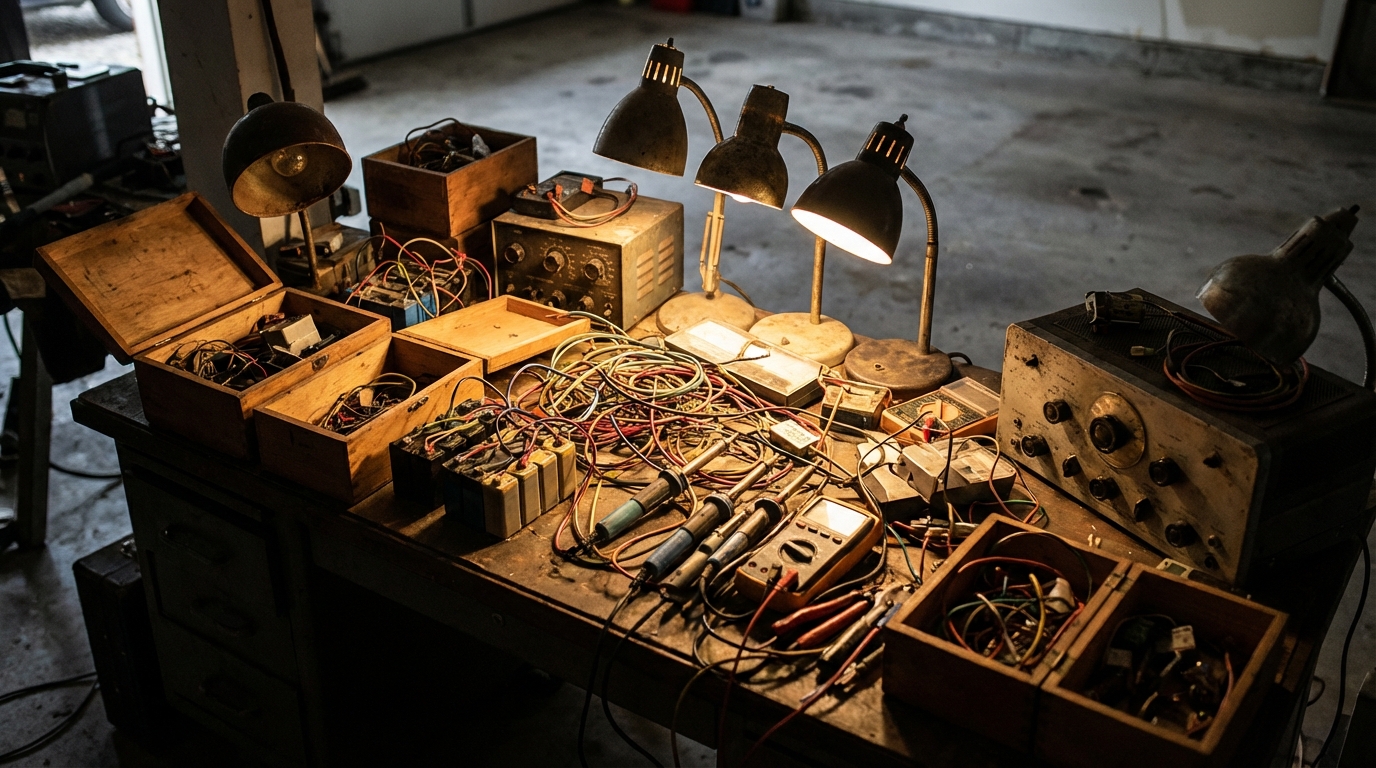
A Sustainable Energy Revolution Starts in the Garage
What if you could power your entire home using discarded laptop batteries? Since 2016, one innovator has been doing exactly that, transforming e-waste into a reliable renewable energy source. This remarkable journey showcases how creative thinking and environmental consciousness can converge to solve real energy challenges. By repurposing 650 used laptop batteries, he's created an independent power system that demonstrates the untapped potential hiding in our electronic waste.
The concept might sound futuristic, but it's grounded in practical engineering and a commitment to sustainability. Rather than relying solely on the grid, this homeowner has built a system that generates and stores electricity efficiently, proving that alternative energy solutions don't always require cutting-edge technology or massive investment.
Understanding the Battery System
Why Laptop Batteries?
Laptop batteries, typically lithium-ion cells, retain significant capacity even after they've been deemed unsuitable for portable computers. When manufacturers replace batteries due to minor degradation, the cells often still contain 70-80% of their original capacity. This makes them ideal for stationary applications where the slight reduction in performance matters far less than it would in a mobile device.
The genius of this approach lies in recognizing that battery degradation is contextual. A laptop user might need 100% capacity to work throughout the day, but a home energy storage system can function perfectly well with slightly reduced capacity, especially when multiple batteries work together.
The Technical Setup
The system uses 650 laptop batteries connected in parallel and series configurations to create a substantial energy storage bank. This arrangement allows for:
- Voltage regulation: Proper series connections ensure the system maintains usable voltage levels
- Capacity expansion: Parallel connections increase overall storage capacity
- Redundancy: If individual cells fail, the system continues functioning with minimal impact
- Flexibility: The modular design allows for additions or replacements without complete system overhaul
How the System Generates Power
Solar Integration
While the laptop batteries serve as the storage component, the actual electricity generation typically comes from solar panels. The batteries act as a buffer, storing energy generated during sunny periods for use during nights and cloudy days. This combination creates a genuinely independent power system that doesn't depend on grid availability.
The beauty of this setup is its resilience. Even during extended periods of poor weather, the large capacity of 650 batteries provides enough stored energy to maintain household operations.
Energy Flow and Management
The system operates on a straightforward principle:
- Solar panels generate electricity during daylight hours
- Charge controllers regulate power flowing into the battery bank
- An inverter converts stored DC power into AC power for household use
- Excess energy charges the battery reserve
- Stored energy powers the home during night hours and low-generation periods
This cycle repeats daily, creating a self-sustaining energy ecosystem that requires no external input once installed.
Environmental and Economic Benefits
Reducing Electronic Waste
The global e-waste problem reaches staggering proportions, with millions of tons of discarded electronics ending up in landfills annually. By repurposing laptop batteries, this project diverts valuable materials from waste streams. The cobalt, nickel, and other materials in lithium-ion batteries represent significant environmental costs to extract, making reuse far preferable to mining new resources.
Long-term Cost Savings
While the initial setup requires investment in solar panels, inverters, and charge controllers, the operational costs are remarkably low. Once installed, the system generates free electricity for years. Many homeowners report dramatic reductions in energy bills, with some achieving near-zero grid dependence.
Consider these financial advantages:
- Elimination of monthly electricity bills
- Protection against rising energy prices
- Reduced maintenance costs compared to grid-dependent systems
- Potential government incentives for renewable energy adoption
- Increased property value for homes with independent power systems
Environmental Impact
By generating clean electricity, this system prevents emissions that would otherwise come from fossil fuel power plants. Over its lifetime, a single home solar and battery system can offset several tons of carbon dioxide emissions.
Challenges and Practical Considerations
Safety and Maintenance
Working with lithium-ion batteries requires proper safety protocols. The homeowner implemented:
- Battery management systems to prevent overcharging and deep discharge
- Proper ventilation to manage heat dissipation
- Regular monitoring and maintenance schedules
- Appropriate fire suppression equipment
- Proper insulation and protective casing
These measures ensure the system operates safely without risk of thermal runaway or other battery-related hazards.
Space Requirements
Storing 650 batteries demands significant space. Most installations of this scale occupy an entire room or dedicated area, making them impractical for apartment dwellers but feasible for homeowners with garage or basement space.
Initial Investment
While operational costs remain minimal, the upfront investment in solar panels, charge controllers, inverters, and installation labor is substantial. However, this cost typically recoups itself within 5-10 years through energy bill savings, depending on local electricity rates.
The Broader Implications
This project represents more than just one person's energy solution. It demonstrates several important principles for the future of residential energy:
Circular economy potential: Showing that waste materials can become valuable resources encourages manufacturers to design products with end-of-life reuse in mind.
Decentralization of power: As more homeowners generate their own electricity, the need for extensive grid infrastructure diminishes, potentially reducing transmission losses and increasing system resilience.
Accessibility of technology: Proving that sophisticated energy systems can be built with repurposed components makes energy independence more achievable for people with limited budgets.
Innovation through constraints: Working with available materials rather than ideal components drives creative engineering solutions that often prove more robust than conventional approaches.
Getting Started with Your Own System
If you're interested in generating electricity for your home using renewable energy and battery storage, here's a practical starting point:
- Assess your energy consumption: Understand your household's daily electricity needs
- Evaluate solar potential: Determine how much sunlight your location receives
- Research battery options: Explore both new and repurposed battery solutions
- Consult professionals: Work with solar installers and electrical engineers
- Check local regulations: Verify building codes and grid connection requirements
- Plan for scalability: Design your system to expand as your needs or budget allows
Looking Forward
The story of powering a home with 650 laptop batteries since 2016 isn't just about one person's achievement. It's a testament to human ingenuity and our capacity to solve problems creatively. As e-waste continues accumulating and energy demands grow, more people are likely to explore similar solutions.
The convergence of renewable energy technology, battery storage innovation, and environmental awareness is creating unprecedented opportunities for residential energy independence. Whether through repurposed laptop batteries or newer battery technologies, the future increasingly belongs to those who generate their own power.
This approach to home electricity generation proves that sustainable living doesn't require sacrificing comfort or convenience. Instead, it demands curiosity, determination, and a willingness to see potential where others see waste.