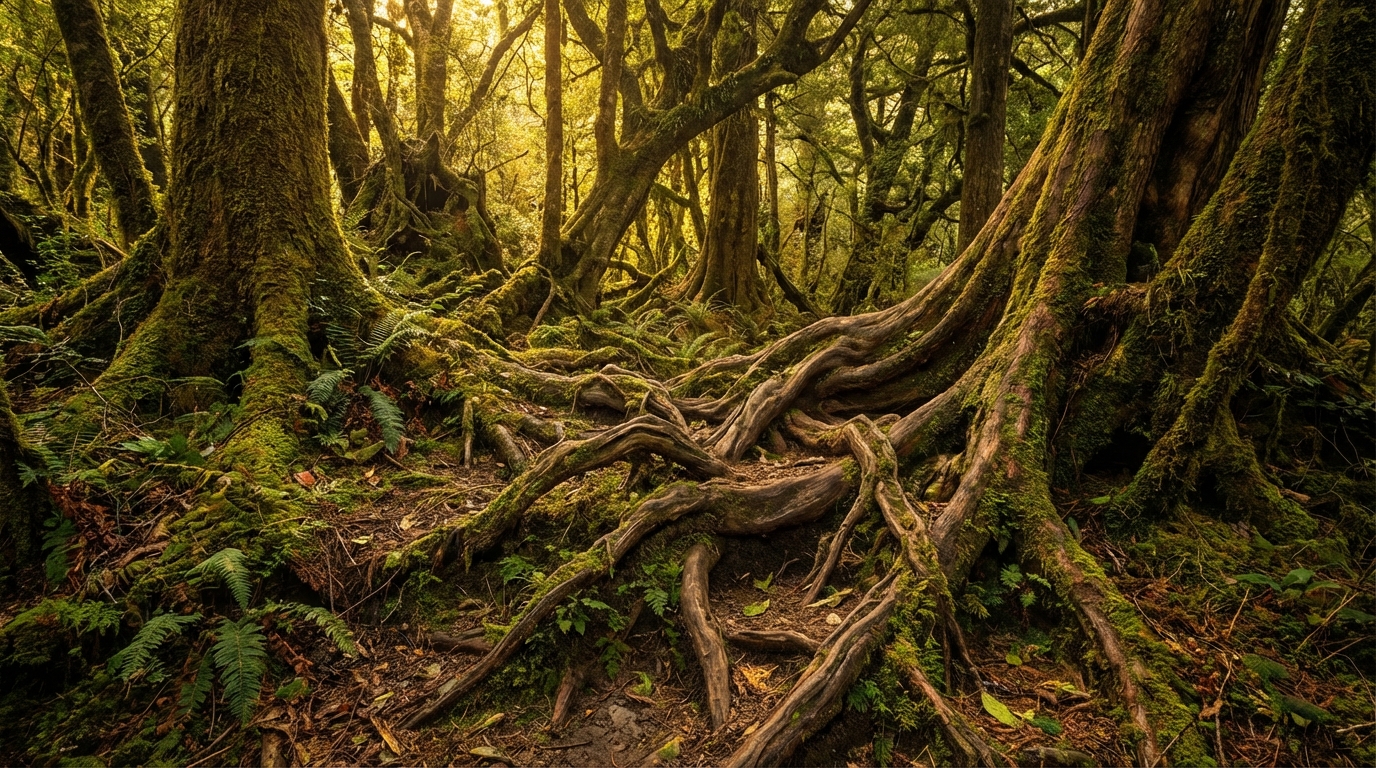
The forest floor beneath our feet holds secrets we're only beginning to understand. Deep below the canopy, where sunlight barely penetrates, an intricate network of roots is sending distress signals. Scientists studying tropical trees have discovered something troubling: the very structures that anchor these giants to the earth are showing unmistakable signs of stress and desperation as our planet warms.
The Silent Struggle Beneath the Canopy
Tropical rainforests have long been celebrated as the lungs of our planet, yet their roots tell a story of increasing vulnerability. Recent research has unveiled that tree roots in tropical regions are undergoing significant changes in response to rising temperatures and shifting precipitation patterns. These changes aren't merely adaptations—they're desperate attempts to survive in an increasingly hostile environment.
The root systems of tropical trees are remarkably specialized. Unlike their temperate cousins, tropical tree roots often remain shallow, spreading horizontally through nutrient-poor soil. This strategy works perfectly in stable climates where rainfall is predictable and consistent. But when conditions shift rapidly, these shallow root systems become a liability rather than an asset.
How Climate Stress Manifests in Root Systems
When tropical trees face prolonged droughts followed by intense rainfall, their root structures show measurable signs of distress:
- Increased root density: Trees are developing more roots in search of water, essentially doubling down on survival strategies
- Deeper root penetration: Some species are attempting to grow roots deeper to access groundwater reserves
- Root dieback: Sections of root networks are dying off due to waterlogging or drought stress
- Reduced nutrient absorption: Stressed roots become less efficient at drawing minerals from the soil
- Weakened structural integrity: Compromised root systems struggle to anchor trees against increasingly severe storms
These changes represent a fundamental shift in how tropical trees are responding to their environment. What's particularly alarming is the speed of these changes. Evolution typically works over millennia, but climate change is forcing these adaptations to happen within decades.
The Desperation Factor: What the Data Reveals
Research teams working in the Amazon, Southeast Asian rainforests, and African tropical regions have documented a concerning pattern. Trees are investing more energy into root growth at the expense of above-ground biomass. This means less foliage, slower growth rates, and reduced capacity to absorb carbon dioxide.
One telling indicator is the increase in root-to-shoot ratios observed across multiple tropical species. In simpler terms, tropical trees are putting proportionally more resources into their roots than their branches and leaves. This is a classic survival strategy—when conditions become uncertain, organisms prioritize stability and water access over growth.
The desperation becomes evident when we examine what happens when these strategies fail. In regions experiencing compound stresses—simultaneous drought, heat waves, and pest outbreaks—we're seeing unprecedented levels of tree mortality. Once a tree's root system becomes too compromised, recovery becomes nearly impossible.
The Cascading Consequences for Ecosystems
The struggles of tropical tree roots don't exist in isolation. They trigger a domino effect throughout entire ecosystems:
Soil degradation: Weakened root networks provide less structural support to soil, increasing erosion and nutrient loss
Reduced carbon storage: Stressed trees absorb less CO2, diminishing one of our most critical natural carbon sinks
Wildlife habitat loss: Declining tree health means fewer resources for the millions of species dependent on tropical forests
Water cycle disruption: Healthy roots help regulate water infiltration and groundwater recharge; compromised roots alter local precipitation patterns
Economic impact: Tropical forests support billions of dollars in ecosystem services, from timber to pharmaceutical compounds
Adaptation or Extinction: The Race Against Time
The critical question facing ecologists is whether tropical trees can adapt quickly enough. Some species show promise. Certain fig species and pioneer trees demonstrate remarkable plasticity, adjusting their root architecture in response to changing conditions. However, the majority of tropical tree species evolved under stable conditions and lack the genetic flexibility to adapt rapidly.
What makes this particularly urgent is the interconnected nature of tropical forests. Unlike temperate forests dominated by a few hardy species, tropical rainforests contain thousands of species, each with specific requirements. When some species begin failing, it destabilizes the entire system.
What We Can Learn from Root Signals
Scientists are increasingly using root systems as early warning indicators of forest health. By monitoring changes in root architecture, nutrient uptake patterns, and structural integrity, researchers can predict which forests are most vulnerable to collapse. This information is invaluable for conservation efforts.
Several monitoring initiatives now focus specifically on root systems:
- Soil core sampling to assess root density and health
- Isotopic analysis to track water and nutrient uptake
- Ground-penetrating radar to map extensive root networks
- Long-term growth ring analysis to identify stress periods
These tools help us understand not just what's happening, but why it's happening and what we might do to help.
The Path Forward: Action and Intervention
While the situation is serious, it's not hopeless. Several strategies show promise in supporting tropical trees through climate transition:
Assisted migration: Carefully introducing genetic diversity from heat-adapted populations into vulnerable areas
Soil enhancement: Improving soil quality to support deeper root penetration and nutrient availability
Drought-resistant species introduction: Strategic planting of more climate-resilient species alongside existing forests
Hydrological management: Protecting and restoring water sources to maintain consistent moisture availability
Reduced deforestation: Maintaining forest cover helps preserve microclimates that buffer individual trees from extreme conditions
The most effective approach combines these strategies with aggressive global emissions reduction. Without limiting warming to manageable levels, even the most sophisticated conservation efforts will struggle to keep pace.
A Moment of Reckoning
The roots of tropical trees are sending us a message, and it's time we listened. These silent structures have supported some of Earth's most complex ecosystems for millions of years, but they're reaching their limits. The desperation evident in their changing architecture reflects the urgency of our climate crisis.
The good news is that we still have time to act. Protecting remaining tropical forests, supporting research into climate adaptation, and reducing our carbon footprint are all within our power. By understanding what tropical tree roots are telling us, we can make informed decisions about how to preserve these irreplaceable ecosystems for generations to come.
The forest is speaking. The question is whether we're ready to hear it.