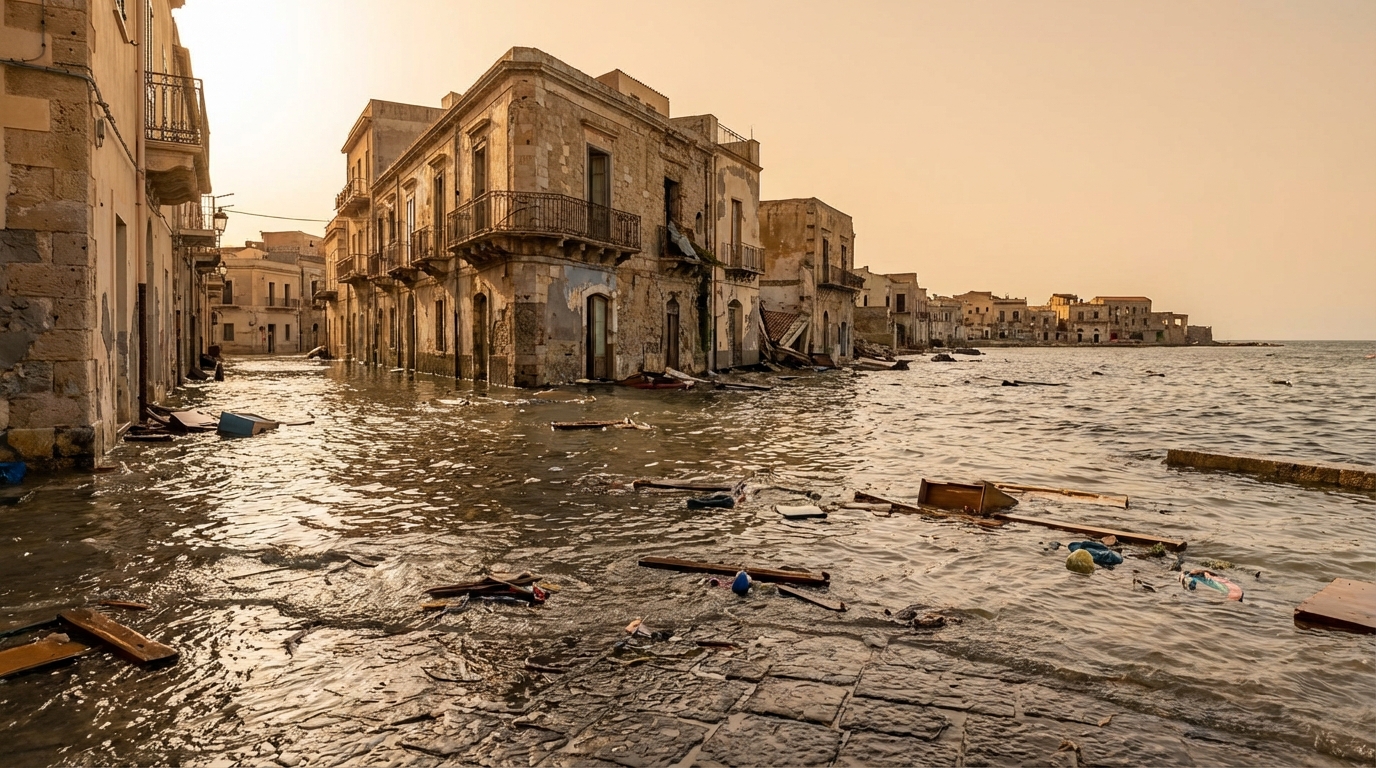
Climate change is reshaping our planet in ways that go far beyond rising temperatures. One of the most alarming consequences is the intensification of extreme rainfall events, which threatens to make entire nations uninhabitable by the end of this century. Scientists warn that certain countries face an existential crisis as torrential downpours become increasingly frequent and severe, overwhelming infrastructure, agriculture, and human survival itself.
The Science Behind Extreme Rainfall Intensification
The connection between global warming and extreme precipitation is straightforward yet terrifying. As the atmosphere warms, it can hold approximately 7% more moisture for every degree Celsius of temperature increase. This means that when rain falls, it falls harder and more abundantly than ever before.
Climate models consistently show that regions already vulnerable to flooding will experience catastrophic precipitation events with alarming regularity. The problem isn't just about occasional storms anymore. We're talking about a fundamental shift in rainfall patterns that could fundamentally alter where humans can safely live.
Recent research from major climate institutes demonstrates that:
- Extreme rainfall events are becoming 10-15% more intense per degree of warming
- The frequency of once-in-a-century storms is increasing dramatically
- Monsoon regions face particularly severe intensification
- Coastal and low-lying areas are doubly vulnerable due to rising sea levels combined with heavier rains
Which Countries Face the Greatest Risk?
Several nations stand at the frontline of this climate catastrophe. These aren't hypothetical scenarios but real threats backed by peer-reviewed science.
Small Island States and Coastal Nations
Pacific island nations like Kiribati, Tuvalu, and the Marshall Islands face dual threats. Extreme rainfall combined with rising sea levels creates a perfect storm for habitability. These countries could see their territories rendered uninhabitable not just by inundation but by the sheer volume of water that rainfall will bring.
South and Southeast Asian Nations
Bangladesh represents one of the most vulnerable countries globally. With its dense population, low elevation, and monsoon-dependent climate, Bangladesh faces catastrophic flooding from both extreme rainfall and river overflow. Climate projections suggest that by 2100, significant portions of the country could become permanently waterlogged.
Other nations in the region, including parts of India, Thailand, and Vietnam, face similar challenges. The Mekong Delta, home to millions, could become largely uninhabitable due to combined effects of extreme rainfall and saltwater intrusion.
African Countries
Sub-Saharan Africa presents a complex picture. While some regions will face increased aridity, others will experience devastating rainfall intensification. Countries like Nigeria, Kenya, and South Sudan already struggle with climate variability, and extreme rainfall will compound existing challenges around water management, agriculture, and disease control.
Central America and the Caribbean
The Caribbean islands and Central American nations face hurricane-strength rainfall events with greater frequency. Honduras, Nicaragua, and Guatemala have already experienced devastating floods from extreme weather, and projections suggest these events will become the norm rather than the exception.
The Cascade of Consequences
Understanding why extreme rainfall makes countries uninhabitable requires looking beyond simple flooding.
Agricultural Collapse: Extreme rainfall destroys crops, erodes topsoil, and makes farming impossible. When rainfall becomes unpredictable and violent, traditional agriculture cannot survive. Food security collapses, forcing mass migration or starvation.
Infrastructure Destruction: Roads, bridges, power grids, and water systems cannot withstand constant extreme weather events. The cost of perpetual reconstruction becomes economically impossible, and basic services cease to function.
Disease Proliferation: Waterlogged environments become breeding grounds for disease-carrying mosquitoes and pathogens. Cholera, dengue fever, and other water-borne diseases spread rapidly in flooded conditions.
Economic Devastation: Tourism, trade, and industry all depend on stable infrastructure and habitable conditions. Repeated extreme weather events make economic activity impossible, leading to complete economic collapse.
Psychological and Social Breakdown: Living under constant threat of catastrophic flooding creates severe mental health crises and social instability. Communities cannot function when survival is uncertain.
Timeline and Projections
The 2100 deadline isn't arbitrary. Climate models suggest that under current emission trajectories, the cumulative effects of extreme rainfall will make certain regions genuinely uninhabitable by century's end. However, the timeline for "uninhabitability" is already beginning:
- By 2050, some regions will experience multiple extreme rainfall events annually
- By 2070, significant population displacement will be unavoidable in vulnerable nations
- By 2100, entire countries may be functionally uninhabitable
These aren't distant concerns. People alive today will witness the beginning of this transformation.
What Makes a Place Uninhabitable?
Uninhabitability isn't a binary switch. It's a gradual process where conditions deteriorate until human life becomes unsustainable. For extreme rainfall scenarios, this means:
- Persistent waterlogging that prevents agriculture
- Infrastructure that cannot be maintained faster than it's destroyed
- Water and sanitation systems that fail
- Economic collapse that prevents importing food and supplies
- Disease prevalence that overwhelms healthcare systems
- Psychological conditions that make communities non-functional
The Global Migration Crisis Ahead
As countries become uninhabitable due to extreme rainfall, we face an unprecedented global migration challenge. Hundreds of millions of climate refugees will need to relocate. This creates geopolitical tensions, resource conflicts, and humanitarian crises on a scale humanity has never experienced.
Nations that remain habitable will face massive pressure to accept refugees, while those experiencing uninhabitability will see their populations forced into desperate migration, often to countries already struggling with their own climate challenges.
What Can Be Done?
While the situation is dire, it's not entirely hopeless. Aggressive action now can still mitigate the worst outcomes:
Emissions Reduction: Limiting global warming to 1.5 degrees Celsius rather than 3 degrees makes a substantial difference in rainfall intensification rates.
Infrastructure Adaptation: Building resilient, flood-resistant infrastructure in vulnerable regions can extend habitability windows.
Agricultural Innovation: Developing crops and farming methods that withstand extreme rainfall is essential for food security.
International Cooperation: Climate migration will require coordinated global responses and burden-sharing among nations.
Nature-Based Solutions: Restoring wetlands, mangroves, and forests helps absorb excess rainfall and protects against flooding.
The Urgency of Now
The countries facing uninhabitability by 2100 due to extreme rainfall aren't asking for charity. They're facing existential threats created largely by emissions from wealthy nations. The moral and practical imperative for action is clear.
The window for preventing the worst outcomes is closing rapidly. Every fraction of a degree of warming we prevent matters. Every policy that reduces emissions, every investment in climate adaptation, and every nation that commits to net-zero targets contributes to preserving habitability for vulnerable countries.
The question isn't whether we can afford to act on climate change. It's whether we can afford not to.